Linked List
Linked List a sequence of data structure connected together via links.
In C a list is usually composed of multiple type of data so we usually use struct so that we can insert multiple amount of data into a single list, also our list also contain a reference(pointer in C) to the next list. So because of this reference our list linked to one another and that is also why this is called linked list. Also in linked list there is another reference that is Head and Tail. Head point to the first list in our linked list and Tail point to the last of our list in the linked list.
Now Linked List usually have 2 type that is :
1. Single Linked List
2. Double/Doubly Linked List
Single Linked List
A single linked list have only one reference that is a reference to the next list. So we could think that a single linked list is like an array.
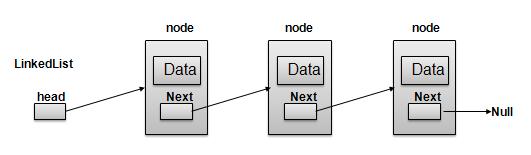
As seen a single linked list only contain one reference that point to the next list. Also in our tail the next pointer is null because there is no more list.
Double Linked List
A double linked list a linked list but unlike single linked list a double linked list a 2 reference(pointer) to other list, that is Previous and Next.
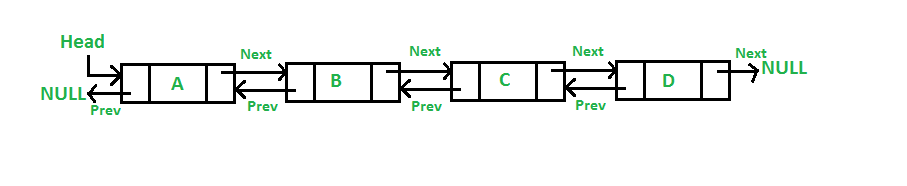
As seen above the Previous reference point to the list before it and the Next reference point to the next list. The head of course have a null Previous reference because it is the first list and the tail have a null Next reference because it is the last list.
Operation
In linked list there can be found several operation :
1. Traversal : Accesses every data in the linked list, usually for searching, inserting, or deleting
2. Search : We use a linear search method to traverse the list and search for the wanted data
3. Insert : Add a new data to the linked list, There are several method of insertion that is :
- Push Head : Insert a new data as the new head(first)
- Push Tail : Insert a new data as the new tail(last)
- Push Mid : Insert a new data in the middle of our linked list
4. Delete : Erase a data from our linked list, There also several mehod of deletion :
- Pop Head : Delete the first(head) data
- Pop Tail : Delete the last(tail) data
- Pop Mid : Delete A data that is specified by the user
1. Push : Insert
2. Pop : Delete
3. Traverse : Accessing data
Comments
Post a Comment